
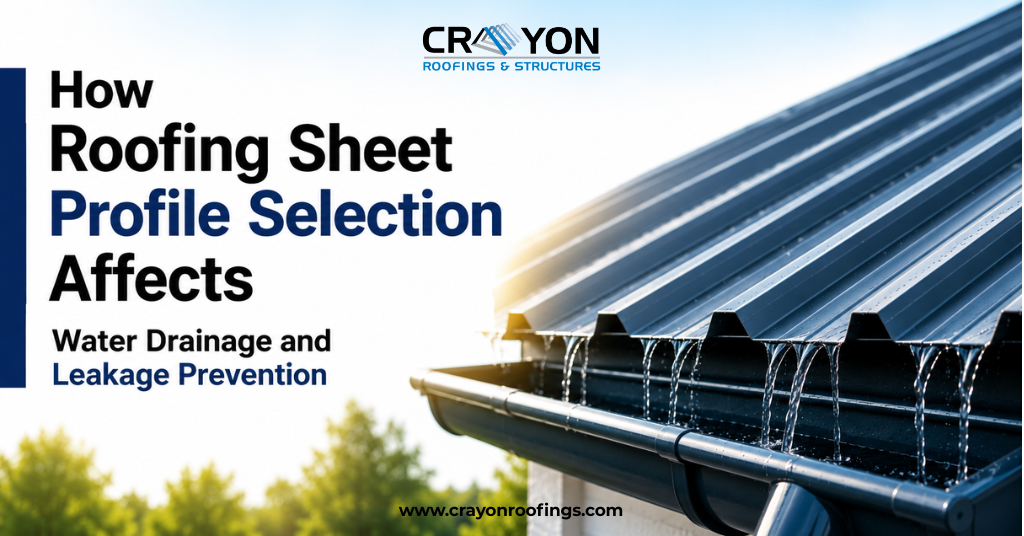
Water leakage is one of the leading causes of roofing failures in industrial, commercial, and agricultural buildings. While many project owners pay close attention to sheet thickness, protective coatings, or brand reputation, one crucial factor often receives less attention—the roofing sheet profile.
The profile plays a vital role in determining how efficiently rainwater flows off the roof, how much water the roofing system can handle during heavy rainfall, and how effectively it resists long-term leakage. Choosing the right profile helps reduce water ponding, protects roof joints and fasteners, and improves the overall durability of the structure.
This becomes even more important in regions that experience intense monsoons or prolonged seasonal rainfall. A well-designed roofing profile ensures faster water runoff, minimises maintenance requirements, and extends the service life of the entire roofing system.
Among the various options available, trapezoidal and corrugated roofing sheets remain the most popular choices. Each profile is engineered for specific applications, roof slopes, and drainage requirements. Understanding how they differ enables builders, architects, contractors, and property owners to select the most suitable roofing solution for their projects.
Why Roofing Profile Selection Is Critical for Water Drainage
Every metal roofing profile is designed with ribs, corrugations, or valleys that perform two important functions. Firstly, they improve the structural strength of the roofing material, allowing it to withstand wind loads and external forces. Secondly, they create channels that direct rainwater safely towards gutters and drainage systems.
Selecting the appropriate profile allows rainwater to flow quickly and efficiently across the roof surface. On the other hand, choosing an unsuitable profile for the building’s roof pitch or local weather conditions can lead to several issues, including:
- Water ponding after heavy rainfall
- Increased risk of roof leakage
- Dirt and debris accumulation
- Higher maintenance costs
- Reduced roof lifespan
For this reason, experienced roofing professionals assess factors such as rainfall intensity, roof slope, span, and building application before recommending the most suitable roofing system.
How Roofing Profiles Improve Rainwater Drainage
Efficient rainwater drainage is essential for maintaining a durable and leak-resistant roof. The design of the profile directly influences how quickly water leaves the roof surface and reaches the drainage system.
Several design factors contribute to drainage performance.
Rib Height
Higher ribs create deeper drainage channels that allow larger volumes of rainwater to flow rapidly without overflowing. This feature is particularly beneficial for industrial buildings exposed to heavy seasonal rainfall.
Valley Design
The valleys between the ribs act as natural pathways that carry water towards gutters. Wider and deeper valleys generally improve drainage efficiency and minimise the possibility of water accumulation.
Roof Pitch
Even a premium roofing system performs differently depending on the roof slope. Matching the profile with the recommended roof pitch ensures smooth water runoff and reduces the risk of standing water.
Rainfall Intensity
Buildings located in high-rainfall regions require profiles capable of handling continuous water flow without allowing moisture to accumulate near overlaps, fasteners, or joints.
When these elements work together, the roofing system remains dry, structurally stable, and less vulnerable to leaks over time.
Trapezoidal vs Corrugated Roofing Sheets: Which Performs Better?
The two most widely used metal roofing profiles each offer distinct advantages. The ideal choice depends on the building type, environmental conditions, roof span, and expected performance.
Trapezoidal Roofing Sheets
A trapezoidal roofing sheet features high angular ribs separated by flat sections. This design creates larger drainage channels that enable rainwater to move rapidly across the roof.
Key Benefits
- Excellent water drainage
- High structural strength
- Better load distribution
- Suitable for long roof spans
- Reduced water ponding
- Improved resistance to leakage during heavy rainfall
Because of these advantages, trapezoidal profiles are commonly used in:
- Industrial buildings
- Warehouses
- Manufacturing facilities
- Commercial complexes
- Logistics parks
- Large production units
Their ability to combine structural performance with superior drainage makes them one of the preferred choices for modern industrial roofing projects.
Corrugated Roofing Sheets
Corrugated roofing sheets are recognised by their distinctive wave-shaped profile, which has delivered dependable performance across residential, agricultural, and light commercial buildings for decades.
Key Benefits
- Reliable rainwater drainage on properly sloped roofs
- Flexible installation
- Traditional appearance
- Cost-effective roofing solution
- Easy maintenance
- Proven long-term performance
These profiles are commonly used for:
- Residential homes
- Farm buildings
- Workshops
- Storage sheds
- Car parking shelters
- Small commercial buildings
Although corrugated sheets provide dependable drainage, they generally carry smaller volumes of rainwater than trapezoidal profiles. As a result, they are better suited for shorter roof spans and moderate rainfall conditions.
Which Roofing Profile Is Better for Heavy Rain?
For industrial and commercial buildings located in regions with frequent or heavy rainfall, trapezoidal roofing sheets generally outperform corrugated profiles. Their deeper ribs and wider drainage channels enable rainwater to flow away more efficiently, reducing water ponding and lowering the likelihood of leaks.
Corrugated roofing sheets remain an excellent option for residential, agricultural, and light commercial buildings with shorter roof spans and adequate roof slopes. Selecting the right profile based on the building’s purpose and local weather conditions helps maximise long-term roofing performance.
How Roofing Profiles Help Prevent Roof Leakage
A durable roofing system relies on more than just quality materials. While protective coatings and proper installation are essential, the profile design also plays a significant role in preventing water ingress. The roof slope, fastening method, overlaps, and accessories all work together to create a weather-resistant structure.
Leaks typically occur when rainwater remains on the roof surface for extended periods. Over time, standing water can penetrate vulnerable areas around fasteners, side laps, end overlaps, or flashings. Choosing a profile that promotes rapid water runoff significantly reduces this risk.
Faster Water Discharge Minimises Leakage Risk
The primary purpose of a roofing profile is to guide rainwater safely towards gutters and drainage systems. Profiles with deeper ribs and wider channels allow water to flow away quickly, even during intense rainfall.
This offers several advantages:
- Minimises water ponding
- Reduces corrosion caused by prolonged moisture exposure
- Lowers stress on side laps and joints
- Keeps fasteners drier for longer
- Improves the overall lifespan of the roofing system
Efficient drainage becomes especially important for industrial buildings with large roof areas, where significant volumes of rainwater must be discharged quickly.
How Roof Overlaps Improve Weather Protection
Roofing panels are installed with carefully designed overlaps that create a continuous, weather-resistant surface. These overlaps play a critical role in preventing rainwater from entering the building.
Side Overlaps
Side laps connect adjacent roofing panels. When correctly installed, they prevent wind-driven rain from penetrating between the sheets and improve the roof’s resistance to leakage.
End Overlaps
End laps occur where one panel overlaps another along the roof length. Proper overlap dimensions allow rainwater to continue flowing downhill without entering the joint.
Modern trapezoidal profiles are often engineered with enhanced side-lap designs that minimise capillary action, making them particularly suitable for industrial and commercial roofing applications.
Importance of Roofing Accessories in Leakage Prevention
Even the highest-quality roofing material cannot deliver reliable performance without the right supporting components. Roofing accessories help seal vulnerable areas and ensure the entire system performs as intended.
Essential accessories include:
- Ridge caps
- Flashings
- Valley gutters
- Closure fillers
- Self-drilling roofing screws
- EPDM sealing washers
- Gutters and downpipes
Each component serves a specific purpose in preventing water entry. For example, ridge caps protect the highest point of the roof, while flashings safeguard roof-to-wall junctions, skylights, vents, and other penetrations. High-quality self-drilling screws fitted with durable EPDM washers help prevent moisture from entering through fastening points.
Using compatible accessories alongside professionally installed roofing panels creates a complete weather-resistant roofing solution.
Trapezoidal vs Corrugated Roofing Sheets Comparison
| Feature | Trapezoidal | Corrugated |
|---|---|---|
| Water Drainage | Excellent | Good |
| Leakage Prevention | Excellent | Good |
| Heavy Rain Performance | Excellent | Good |
| Structural Strength | High | Moderate |
| Long Roof Spans | Excellent | Moderate |
| Industrial Buildings | Highly Recommended | Suitable |
| Residential Buildings | Suitable | Excellent |
| Maintenance | Lower | Moderate |
| Water Ponding Resistance | Excellent | Good |
While both profiles offer dependable performance, trapezoidal roofing sheets are generally preferred for industrial and commercial projects where efficient drainage, structural strength, and long-term durability are priorities.
How to Choose the Right Roofing Solution
Selecting the right roofing profile involves evaluating several practical factors rather than focusing solely on price.
Consider the Building Type
Factories, warehouses, manufacturing plants, and logistics centres typically benefit from trapezoidal roofing sheets due to their superior load-bearing capacity and excellent drainage performance.
Corrugated roofing sheets remain a practical choice for residential buildings, agricultural structures, workshops, and smaller commercial projects.
Evaluate Local Rainfall
Buildings located in regions with heavy seasonal rainfall should prioritise profiles capable of handling large volumes of water efficiently.
Deep-rib trapezoidal profiles are particularly effective in these conditions, helping minimise water accumulation and reducing the risk of leakage.
Match the Roof Span
Long-span roofs require stronger profiles that maintain structural stability while allowing efficient rainwater runoff.
Selecting a profile designed for the intended span improves both safety and long-term performance.
Choose High-Quality Roofing Materials
The overall effectiveness of any roofing system depends not only on the profile but also on the quality of the steel, protective coatings, fasteners, and accessories used during installation.
For projects requiring premium roofing solutions, JSW Colouron+ Roofing Sheets are engineered to deliver excellent corrosion resistance, long-term durability, and dependable weather protection for industrial, commercial, and infrastructure applications.
As a trusted JSW Roofing Sheets distributor, Crayon Roofings supplies premium roofing sheets along with compatible accessories that help customers build durable, weather-resistant roofing systems.
Conclusion
Choosing the right roofing profile is one of the most important decisions when designing a durable, leak-resistant roof. While sheet thickness, protective coatings, and installation quality all contribute to performance, the profile has a direct impact on how efficiently rainwater drains from the roof.
For industrial and commercial projects, trapezoidal roofing sheets provide superior water drainage, greater structural strength, and enhanced resistance to leakage, making them an ideal choice for warehouses, factories, and manufacturing facilities. Corrugated roofing sheets continue to offer a dependable and economical solution for residential, agricultural, and light commercial buildings with shorter roof spans and moderate drainage requirements.
If you’re planning a new roofing project or replacing an existing roof, sourcing materials from a trusted supplier is equally important. Contact Crayon Roofings who offers high-quality roofing sheets and compatible roofing accessories designed for industrial, commercial, and infrastructure applications, helping customers build roofing systems that deliver reliable performance for years.
By understanding the differences between trapezoidal and corrugated profiles, you can improve water drainage, minimise leakage risks, and maximise the long-term value of your investment.
Frequently Asked Questions
Q. Which roofing profile is best for heavy rainfall?
A. Trapezoidal roofing sheets are generally the preferred choice for heavy rainfall because their deeper ribs create larger drainage channels that move rainwater quickly, reducing water ponding and lowering the risk of roof leakage.
Q. Are trapezoidal roofing sheets better than corrugated roofing sheets?
A. Both profiles offer dependable performance but are designed for different applications. Trapezoidal roofing sheets are ideal for industrial and commercial buildings, while corrugated roofing sheets are commonly used for residential, agricultural, and light commercial projects.
Q. Can choosing the wrong profile cause roof leaks?
A. Yes. An unsuitable profile for the roof slope or local rainfall conditions can slow water drainage, increasing the likelihood of standing water, seepage, and leakage around overlaps and fasteners.
Q. Does sheet thickness prevent roof leakage?
A. Not necessarily. Thickness mainly contributes to structural strength. Effective leak prevention depends more on the roofing profile, roof slope, installation quality, overlap design, and compatible roofing accessories.
Q. Why are roofing accessories important?
A. Accessories such as ridge caps, flashings, closure fillers, gutters, self-drilling screws, and EPDM sealing washers help seal vulnerable areas and improve the overall weather resistance and lifespan of the roofing system.