
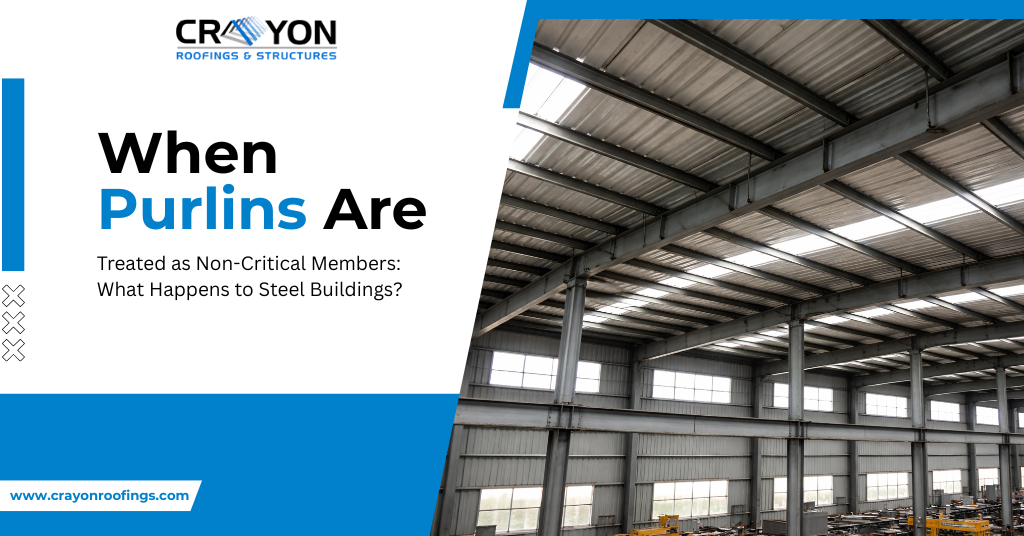
Purlins are often misunderstood in modern steel buildings, frequently labeled as non-critical elements despite their essential role in overall structural performance. While they do not serve the same primary load-bearing function as columns or rafters, purlins form a vital link in the roof load path, contributing directly to a building’s stability, safety, and long-term durability.
In both industrial and commercial construction, this misconception has led to purlins being overlooked during design, undervalued during procurement, or improperly installed on site. When roof purlins are incorrectly sized, spaced, or detailed, the consequences can compound over time manifesting as structural distress, safety risks, or costly remedial work.
As we move into 2026, purlins can no longer be dismissed as “non-critical” members. Increasing wind loads, integrated roof systems, and stricter compliance with evolving standards have elevated their structural importance. Treating purlins as secondary elements is no longer just a design oversight, it is a growing structural risk.
Understanding the Role of Purlins in Steel Building
Types of Purlins Used in Industrial Structures
Most industrial steel buildings use cold-formed steel purlins, selected based on span, bay spacing, wind zone, and roofing configuration. Common types include:
- C-Purlins(common in the end of the building purlins and wall to building interfaces).
- Z-Purlins (often used to create lapped continuity across long spans).
- Built-up or Custom Purlins (required for heavy-duty or special applications).
Unlike hot-rolled sections, steel purlins are engineered for optimized strength-to-weight performance, making accurate design and manufacturing precision critical.
Why Are Purlins Often Treated as Non-Critical Members?
Are Purlins Structural or Non-Structural Members?
This is a common misconception about purlins, as many people believe they are merely secondary structural members. The term “secondary” refers to the relationship of purlins to other structural members in regards to the sequence in which they receive loads but does not refer to the importance of purlins as structural members.
Purlins directly affect:
- Roof deflection limits
- Wind resistance
- Fastener performance
- Overall roof system integrity
If the structural role of the purlin members is ignored, then the whole building envelope is compromised.
What Happens When Purlins Are Undersized in Steel Buildings?
Roof Deflection and Sheet Damage
Undersized or widely spaced purlins lead to excessive roof deflection. Over time, this results in:
- Sagging roof sheets
- Oil-canning effects
- Fastener fatigue or pull-out
These are early indicators of serviceability failure, not merely cosmetic defects.
Load Redistribution and Structural Stress
The loads will redistribute differently when Purlins do not perform their intended function. This uneven load distribution on the rafters and structural braces of a large span industrial steel building can accelerate fatigue on those structural elements and reduce the design life of the entire building.
Safety and Operational Risks Linked to Poor Purlins Design
Wind Uplift Failure and Storm Damage
Purlins are critical in resisting upward lifting forces in high-wind areas. Poorly designed purlins can lead to poor connections between components, which is one primary reason why roof sheets come loose during high-wind events. Even if the roof sheet itself is manufactured from high-quality materials, the roof sheet will not stay attached to a weak purlin system.
Maintenance and Access Hazards
In addition to adding structural integrity to the roof system, the purlins also provide an adequate walking surface for maintenance personnel, HVAC units, and solar panels. If the purlins are inadequate and not providing sufficient support, they will cause deflection of the purlins when a person is walking on them creating unsafe working conditions for maintenance personnel and causing long-term deflection of the purlins.
Financial Impact of Treating Purlins as Non-Critical
Short-Term Savings vs Long-Term Costs
The short term savings from lighter purlins is often negated by:
- Roof sheet replacement over and over again
- Structural retro-fitting
- Production downtime of industrial facilities
In many instances, the cost to fix errors greatly outweighs the original savings.
Coordination Gaps and Warranty Disputes
Roofing failures frequently result in disputes between fabricators, roofing contractors, and project owners. When purlin design is inadequate, accountability becomes unclear.
This is where experienced manufacturers like Crayon Roofings add real value by ensuring roofing sheets, fasteners, and installation practices are structurally aligned with purlin behavior rather than treated as isolated components.
How Properly Designed Purlins Extend the Life of Steel Buildings
When purlins are treated as part of the structural system:
- Roof system performs consistently
- Reduced maintenance cost
- Improvements to safety
- Extended building life
For strong steel buildings, it is essential that all structural components are valued and maintained. This is true even for components that may not appear visually impressive or functional.
Choosing Reliable Purlins Manufacturers in Chennai
Working with experienced purlins manufacturers in Chennai offers practical advantages:
- Faster delivery timelines
- Better quality control
- Familiarity with regional wind zones and corrosion conditions
- Easier coordination with roofing and structural teams
Local expertise significantly improves execution accuracy in industrial steel buildings.
Conclusion:
Purlins should not be treated as noncritical for purposes of optimization; this is instead a structural compromise. As climate loads evolve and roofing systems become integrated in 2025, purlins will require the same engineering seriousness as any major structural member. The failures in steel buildings seldom originate from items that appear large; they invariably begin from items which were underestimated.
If you are designing a project and need a technically sound, well-manufactured purlin that can accommodate the latest roofing systems, Contact Crayon Roofings to assist you with your next project.
Frequently Asked Questions ( FAQ):
Q.Are purlins considered structural members?
A.Yes. While classified as secondary, purlins are structural members that directly influence roof performance and safety.
Q.What happens if purlin spacing is increased?
A.Increased spacing raises deflection, stresses roof sheets, and increases wind-related failure risk.
Q.Do purlins affect wind resistance?
A.Absolutely. Purlins are critical in resisting wind uplift and maintaining roof system integrity.