
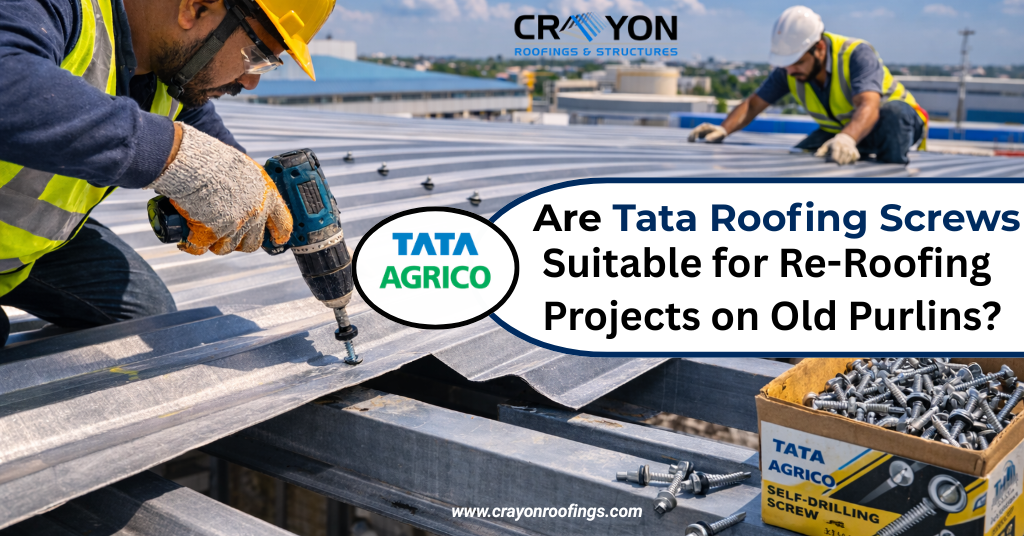
After years of exposure to weather, heat, and wear and tear, many industrial buildings are in need of an industrial re-roofing project. In many cases, existing steel purlins that support the roof sheets are still structurally sound enough to be reused. Therefore, instead of completely rebuilding the entire roofing system, the building owner usually will only replace the roofing sheets.
When conducting these types of projects, choosing the correct metal roofing fastener is critical. The screws used to attach the existing roof sheets to the existing steel members need to provide a secure, watertight connection. As such, the use of Tata Roofing Screws is very common in industrial roofing systems where strong and reliable fastening is required.
However, will these screws perform satisfactorily when new roof sheets are attached to the existing steel purlins? This blog gives a review of both the properties of the screws and the present condition of the existing structure will assist in determining if these screws are appropriate for re-roofing applications.
Role of Tata Roofing Screws in Industrial Metal Roofing Systems
Fasteners are important components in metal roofing systems as they help to ensure the overall structural integrity of the roof. If screws are poorly manufactured and therefore of poor quality, it can lead to roofing sheets becoming loose, allowing water in, and ultimately damaging the roof over time.
The Tata Roofing Screw is designed for use in the installation of steel-to-steel roofing sheets and is suitable for all types of industrial roofing systems.
The Tata Roofing Screw has a number of features that contribute to its reliability in an industrial roofing installation.
- Self-drilling point that allows the screw to penetrate steel purlins without pre-drilling
- High strength to weight ratio which ensures secure fastening of the roofing sheets
- Corrosion-resistant coating to protect the screw in an outside environment, and
- EPDM sealing washer to assist with preventing water from leaking at the screw point.
Because of these features, Tata Roofing Screws are commonly used in roofing sheet installation for factories, warehouses, and industrial sheds.
Why Tata Roofing Screws Are Preferred in Industrial Roofing
Trapezoidal metal roofs supported by steel purlins are commonly used in most industrial buildings. Over time, these roofing systems are exposed to different environmental conditions such as strong winds, heavy rainfall, condensation, and continuous temperature changes.
In order for these metal roofs to remain attached to their supporting structure, reliable roof fasteners, like Tata Roofing Screws, must be utilized.
Roof fasteners that have been used on industrial roofs include:
- Industrial production sites
- Logistics storage centers
- Bulk material storage structures
Common Challenges When Re-Roofing Over Old Steel Purlins
While re-roofing over existing purlins can reduce construction time and cost, several site conditions must be considered before installing new roofing sheets.
Structural Wear in Existing Purlins
Purlins that have been in place for several years are likely to show evidence of surface corrosion from moisture and environmental factors and changes to their shape because of long-term structural loads, such as:
- minor bending of purlins
- reduction in steel thickness in certain areas
All of these factors will affect the behavior of the Tata Roofing Screws as they grip the steel members that have been corroded and deformed.
Oversized Fastener Holes in Purlins
Older roofs usually leave behind existing screw holes in the purlins. When installing new roofing sheets, these holes may reduce the holding strength of the screws.
Roofers will often reposition screws or marginally adjust where the screws are installed when installing new roofing sheets
Roof Alignment Variations
In some industrial buildings, purlins may shift slightly over time due to structural movement. This may create a significant level of difficulty for roofers to properly install sheets on misaligned purlins.
Can Tata Roofing Screws Be Used on Old Steel Purlins?
In many industrial re-roofing projects, Tata Roofing Screws can be effectively used on existing steel purlins if the structure remains in good condition.
How Tata Roofing Screws Perform on Existing Purlins
- Tata roofing screws are built to self-drill through old steel without needing pre-drilling.
- The threads of the screws provide a stronger hold on the purlins allowing the screws to keep the roofing securely attached, even after many years of use
- The EPDM washer that is supplied on the screws seals the location of the screw and will help prevent any leakage of water through the screw location.
When Tata Roofing Screws Provide Reliable Fixing
These screws usually perform well when:
- The purlins are still structurally stable.
- corrosion levels are moderate or minimal
- the correct screw length and type are selected
Using the correct Tata Roofing Screws ensures that roofing sheets remain securely attached to the purlins during industrial re-roofing projects.
Situations Where Structural Correction May Be Needed
In some situations,repairing or reinforcing purlins for new roofing sheets may be necessary, depending on the condition of the purlins. Consideration for repair and reinforcement should be made if:
- the purlins are greatly corroded
- The screw holes will become wider than the proper size
- the alignment of the purlin members has changed considerably.
By maintaining structural integrity through repair and/or reinforcing measures, proper initiation of fasteners and the longevity of roof performance can be realised.
Factors to Check Before Using Tata Roofing Screws on Old Purlins
Contractors will typically condition check the structural integrity of the old roof structure prior to the installation of new roofing sheets
Purlin Condition
Steel purlins need to be checked for signs of corrosion, deformation and structural stability. Severely damaged purlins may need to be replaced.
Screw Compatibility
Selecting the correct Tata Roofing Screws is important for achieving strong fastening. Screw length and drill point type must match the steel thickness and roofing sheet profile.
Recommended Installation Guidelines
During installation, it is important to keep the screw spacing consistent across the roof. Installers should also tighten the screws to the correct level and avoid excessive tightening, as this can damage the EPDM washers. Following these practices helps ensure that Tata Roofing Screws perform reliably in industrial roofing systems.
Conclusion
Replacing the roof while leaving the existing purlins in place can effectively prolong the lifespan of an industrial structure. If the purlins remain in good condition, Tata Roofing Screws are typically suitable for firmly attaching the new roofing sheets.
Crayon Roofings serves as an official distributor of Tata Roofing Screws in Tamil Nadu and Pondicherry, providing essential fasteners for industrial roofing needs. Purchasing screws from an authorized distributor guarantees the authenticity of the products, their dependability, and uniform performance.
The effectiveness of any re-roofing endeavor relies heavily on a thorough examination of the current roof structure prior to the start of installation. For significant industrial buildings looking to enhance their roofs, Metfraa Steel Buildings offers industrial re-roofing services that involve replacing or upgrading old roofs to bolster their resilience and safeguard against various weather elements.
Frequently Asked Questions ( FAQ):
Q.Can Tata roofing screws be used on old purlins?
A.Yes. Tata Roofing Screws can be used on old steel purlins if the structural members remain stable and free from severe corrosion.
Q.Do purlins need replacement during re-roofing?
A.Not always. In many industrial roofing projects, purlins can continue to support the new roofing sheets if they remain structurally sound.
Q.Why are Tata roofing screws commonly used in industrial roofing?
A.Tata Roofing Screws are designed for steel-to-steel fastening and include corrosion-resistant coatings and sealing washers, making them suitable for industrial roofing systems.