
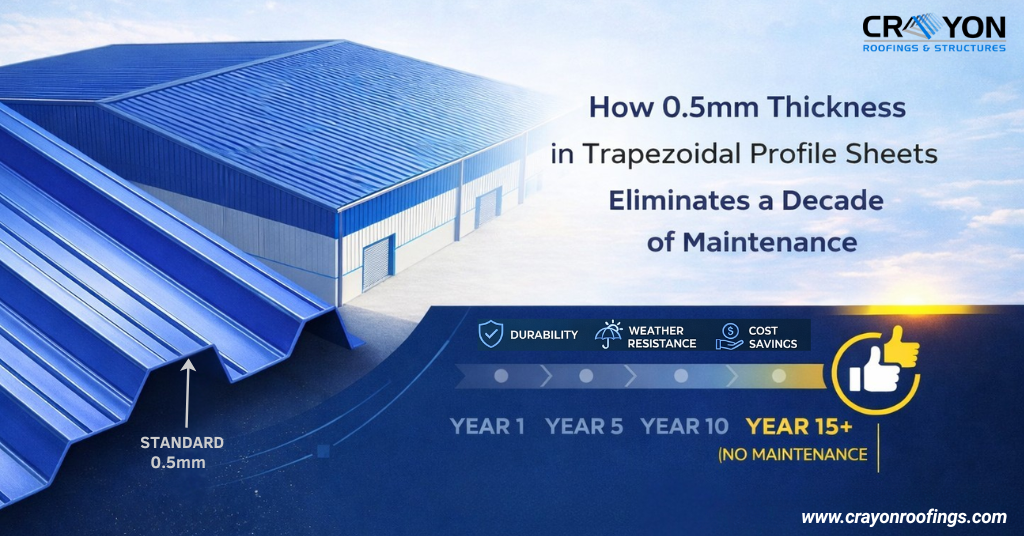
How 0.5mm Thickness in Trapezoidal Profile Sheets Eliminates a Decade of Maintenance
Industrial roofing systems are designed to deliver durability, structural stability, and long-term performance under demanding conditions. Among the various factors that influence their effectiveness, thickness is one of the most critical yet often overlooked parameters in Trapezoidal Profile Sheets.
In industrial applications such as warehouses, manufacturing facilities, and pre-engineered buildings, insufficient roofing sheet thickness leads to recurring issues, including deformation, corrosion, and leakage. These challenges increase maintenance requirements and impact operational efficiency over time.
A controlled increase of 0.5mm in Trapezoidal Profile Sheets significantly enhances structural strength, improves resistance to environmental stress, and extends the lifecycle of roofing systems. In industrial construction, thickness is not just a technical specification but also a key factor in ensuring long-term reliability and cost efficiency.
How 0.5mm Thickness in Trapezoidal Profile Sheets Eliminates Maintenance
Stability of the Shape in Trapezoidal Profile Sheets
Having 0.5mm more in thickness makes the product stiffer. This has been done to fight waviness and ensure the Trapezoidal Profile Sheets maintain their profile.
Weather Resistance in Trapezoidal Profile Sheets
Industrial roofing products face the following challenges:
● Heavy rainfall
● Thermal expansion
● Uplift caused by wind
Having thicker Metal Roofing Sheets ensures the products are protected from the elements and enjoy quality of service.
Leak Prevention in Roofing Sheets
Having more thickness ensures the product seals well. The chances of leaks in Roofing Sheets are reduced.
Lifecycle of Trapezoidal Profile Sheets
Having more thickness in the Trapezoidal Profile Sheets ensures the following benefits:
● 10-15 years of product life
● Reduced product maintenance
● Minimal disruptions in the operations
What Is the Best Thickness for Trapezoidal Profile Sheets?
The best thickness for Trapezoidal Profile Sheets is 0.5mm or higher. This specification provides improved structural strength, better corrosion resistance, and enhanced durability, making it suitable for industrial roofing sheets used in warehouses, factories, and PEB structures.
Cost vs Value of Trapezoidal Profile Sheets with 0.5mm Thickness
Initial Cost Comparison of Roofing Sheets
The valuation difference for thin and thick roofing Sheets costs is very small at the initial stage of purchase.
Maintenance Cost of Metal Roofing Sheets Over Time
Thin sheets will lead to:
- More repair costs
- Damage from leaks
- More time lost
ROI of Trapezoidal Profile Sheets
Making an investment in thick Trapezoidal Profile Sheets will save on costs, as it reduces maintenance costs and increases its lifespan, thereby ensuring financial efficiency in industrial roofing.
Why Trapezoidal Profile Sheets Thickness is Important for Chennai’s Coastal Weather
Chennai’s coastal weather subjects industrial roofing to harsh weather, such as:
- High humidity levels
- Saline air
- Temperature changes
This weather condition increases corrosion and sheet fatigue. Adequate thickness of Metal Roofing Sheets is required to improve durability.
Trapezoidal Profile Sheets in Industrial Roofing Systems
Trapezoidal Profile Sheets refers to the Roofing Sheets, which have been engineered with a trapezoidal ribbed profile for better load distribution.
Trapezoidal Profile Sheets are commonly used in:
- Industrial Sheds
- Warehouses
- PEB Structures
- Commercial Complexes
Metal Roofing Sheets with trapezoidal profiles, in comparison with conventional flat sheets, have better:
- Load Bearing Capacity
- Drainage Efficiency
- Resistance to deformation
Trapezoidal Profile Sheets are suitable for modern industrial roofing systems.
Why Thickness in Trapezoidal Profile Sheets Determines Industrial Roofing Performance
The thickness of Trapezoidal Profile Sheets directly impacts strength, corrosion resistance, and long-term reliability.
Structural Strength of Trapezoidal Profile Sheets
Increased thickness enhances load-bearing capacity and minimizes deformation. Thicker Trapezoidal Profile Sheets:
- Resist bending under load
- Maintain structural alignment
- Perform consistently under operational stress
Corrosion Resistance in Metal Roofing Sheets
Environmental exposure, particularly in coastal areas, compounds the corrosive effects. Thicker Metal Roofing Sheets improve:
- Coating retention
- Resistance against rust formation
- Durability in severe conditions
This is crucial for corrosion-resistant roofing sheets in industrial environments.
Fastener Holding Capacity in Trapezoidal Profile Sheets
Adequate thickness ensures strong fastener grip. This improves:
- Screw retention
- Structural stability
- Leak prevention
This enhances the overall reliability of Roofing Sheets.
How to Choose the Right Trapezoidal Profile Sheets for Your Project
Key Selection Factors
- Roofing sheet thickness
- Coating specifications
- Structural and environmental requirements
Importance of Supplier Expertise
A qualified supplier ensures:
- Consistent material quality
- Accurate thickness standards
- Reliable project support
Thickness is one of the key parameters which affect the performance of Trapezoidal Profile Sheets in Industrial roofing systems. The strength of the structure, the resistance to corrosion, and the benefits in terms of life cycle strength gain from the Trapezoidal Profile Sheets are highly increased by the increment in thickness from 0.5mm. This minimizes the maintenance problems and ensures cost efficiency in the long term.
Thickness selection and procuring the roofing sheets from a roofing sheets distributor who has experience in Industrial roofing systems ensures quality and performance parameters in terms of exposure to harsh conditions.Contact Crayon Roofings For project-specific guidance and assured supply.
Frequently Asked Questions ( FAQ):
Q. What is the ideal thickness for trapezoidal profile sheets?
A. The ideal thickness for Trapezoidal Profile Sheets is 0.5mm or higher, ensuring better strength, durability, and long-term performance in industrial roofing applications.
Q. Is 0.5mm thickness enough for trapezoidal profile sheets?
A. Yes, 0.5mm is the minimum recommended thickness for Trapezoidal Profile Sheets, offering a good balance between structural strength and cost efficiency for industrial buildings.
Q. Does thicker trapezoidal profile sheet reduce maintenance?
A. Yes, increased thickness improves rigidity, reduces deformation, and enhances resistance to corrosion and leakage, significantly lowering maintenance needs.
Q. What happens if trapezoidal profile sheets are too thin?
A. Thin Trapezoidal Profile Sheets are prone to bending, leakage, and faster corrosion, leading to higher maintenance costs and reduced lifespan.