
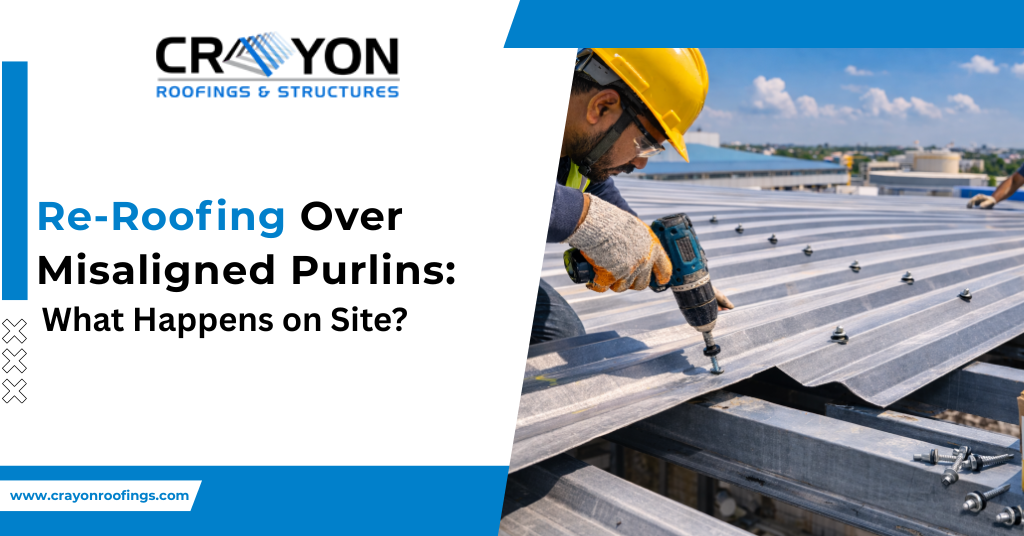
Industries will routinely need to have their industrial roofing replaced or repaired after years of weather exposure, corrosion, or operational wear. Over time, roof sheeting can fail, leading to leaks, structural problems, and reduced thermal insulation performance. When old roofing sheets are taken off and the contractor finds structural issues, they may not have the time or skill to fix them before installing new roofing sheets.
One of the most common on-site issues during industrial roof renovation is the presence of misaligned purlins. These structural members play a critical role in supporting the roofing system. When they are uneven, bent, or improperly spaced, installing new roofing sheets becomes more complicated and may affect the long-term performance of the roof.
Building owners and contractors can better understand the process of replacing or repairing misaligned purlins when they re-do the roofs of an industry and develop a reliable roof system
Understanding the Role of Purlins in Industrial Roofing
Purlins are horizontal elements of structural steel that are installed horizontally across the top of the building in order to support the metal roofing sheets. In industrial buildings, they are an important part of the overall roof structure and are responsible for transferring the loads experienced by the roofing sheets to the main roof frame of the building.
Most metal roofs have the roofing sheets attached directly to the purlin structure. Their main functions are to:
- Support the roofing sheets for long spans across the roof.
- Distribute the loads from wind, rain, and equipment.
- Maintain consistent spacing for proper attachment of roofing sheets to the purlins.
- Provide a secure fastening point for the roofing system.
When purlins are installed properly, the roofing sheets installed on them are located evenly across the roof surface. This will provide for proper drainage of water, efficient load distribution, and increased structural integrity of the overall building roof.
However, if the purlins are not installed correctly and become uneven over the years, contractors encountering difficulties in re-roofing will notice several on-site challenges.
Common Causes of Misaligned Purlins
Misalignment in roof support structures can occur for several reasons, especially in older industrial buildings.
Structural Settlement Affecting Purlins
Over time, buildings may experience foundation settlement due to soil movement or long-term structural stress. When the main structural frame shifts, the connected roof support members may lose their original alignment.
This can create uneven roof surfaces that complicate roofing sheet installation.
Installation Errors in Purlins
Some of the causes of purlin misalignment may have occurred during construction.
Typical installation errors include:
- Improper distance maintained between purlins
- Purlin not being level when installed
- Purlin poorly measured
The errors listed above could remain hidden until a thorough roof structural inspection is done when the roof is to be replaced
Deformation or Damage in Roof Support Members
Steel roof components may also become misaligned due to physical damage or long-term deterioration.
Some common reasons for misalignment include:
- Overloading a roof beyond its intended capacity
- Corrosion weakening a steel member
- Mechanical damage caused during maintenance work
If the above events occur, it may be necessary to reinforce or replace the roof’s supporting system.
On-Site Challenges When Re-Roofing Over Misaligned Purlins
During industrial roofing projects, the true condition of the roof structure often becomes visible only after old roofing sheets are removed.
As a result of alignment issues within the roof structure, contractors experience multiple challenges when fitting the roof sheets to the roof.
Roofing Sheet Fitment Problems
Metal roofing sheets require even structural support for proper installation. When roof support members are uneven, contractors may face:
- Difficulty maintaining straight sheet alignment
- Uneven sheet seating across the roof
- Challenges in positioning fasteners correctly
The issues listed previously can take time away from the installation process of roofing sheets and extend the overall roof installation timelines.
Leakage Risks Around Misaligned Purlins
Alignment problems may also create small gaps between roofing sheets and the structural support below.
This may eventually lead to the following issues:
- Inadequate sealing around screw fasteners
- Incorrect overlap between roofing sheets
- Water infiltration during periods of heavy rainfall
Over time, such issues may result in recurring roof leakage.
Structural Stress on Roofing Sheets
Installing roofing sheets on uneven structural members can cause the load to be distributed unevenly across the roof. Consequently, it may lead to
- Distortion or bending of the roofing sheets
- Increased vibration during high wind conditions
- A reduction in the overall lifespan of the roofing system
Correcting alignment issues before installing new roofing sheets helps prevent these long-term performance and structural concerns.
How Contractors Identify Misaligned Purlins
Before installing new roofing sheets, experienced contractors perform a roof structural inspection to evaluate the condition of the roof support framework.
Visual Roof Inspection
Before starting any roofing work, a detailed inspection of the roof support system is carried out to identify possible issues, such as:
- Structural elements that appear to be bending or sagging
- Inconsistencies in the roof slope
- Visible signs of corrosion or other forms of damage
The presence of these issues may indicate hidden structural concerns in the rafters or other framing elements
Alignment Measurement Techniques
Contractors use specialized measuring instruments to assess the accuracy of their work such as:
- laser level alignment instruments
- String lines for maintaining straight reference points
- straight edges to verify that the length of the purlins on the entire span of the roof were aligned correctly.
These methods help determine whether the purlins are properly aligned across the roof structure.
Structural Assessment Before Re-Roofing
If there are any major alignment issues found, the contractor will complete a structural evaluation of the roof system to determine if the existing roof frame can support new roofing sheeting.
This is especially important for larger industrial repair and renovation jobs where multiple roofs may be involved.
Solutions for Correcting Misaligned Purlins
Several practical methods can be used to correct alignment issues during re-roofing.
Shim Adjustments
For minor height differences, contractors often use metal shims or spacers to level structural members.
This creates a flat surface for roofing sheet installation.
Structural Reinforcement
If any part of the roof support structure has failed, it may need additional support to maintain its structural integrity.
Common structural reinforcement methods include:
- Adding additional steel members
- Adding additional structural support through welding to existing members
- Redesigning the complete roof framing system to improve structural strength.
These solutions improve the strength of the steel roof structure.
Replacement of Damaged Purlins
If structural members are severely bent or corroded, replacement may be necessary.
This process involves:
- Removal of the damaged steel member
- Installation of new steel members
- Realignment of roof structure prior to placing roofing sheets
Replacement of purlins in a compromised condition provides stability for the structure in the long-term.
Signs That Your Industrial Roof May Have Misaligned Purlins
Certain warning signs may indicate alignment problems within the roof structure.
Common indicators include:
- Uneven roof lines
- Recurring roof leaks
- Visible sagging in roofing sheets
- Loose fasteners or sheet movement
- Noise or vibration during strong winds
If these symptoms appear, a professional industrial roof inspection is recommended.
Risks of Ignoring Misaligned Purlins
Ignoring alignment issues during industrial roof renovation can lead to serious long-term problems.
Potential risks include:
- Removal of the damaged steel member
- Installation of new steel members
- Realignment of roof structure prior to placing roofing sheets
- Replacement of purlins in a compromised condition provides stability for the structure in the long-term.
Best Practices for Re-Roofing Over Existing Purlins
For the successful completion of industrial roofing projects, preparation and evaluation of the structural integrity of the buildings are essential steps to complete prior to starting your project.
The following are examples of best practices for completing a roof construction project:
- Conducting complete roof structural assessments prior to installing any new roofing systems
- Correcting any misalignments that may exist prior to installing the new roofing sections
- Installing the appropriate fasteners along with the appropriate profiles of your new roofing system.
- Ensuring proper fastening spacing of the roof systems.
- Using an experienced roofing specialist on large industrial projects to conduct detailed inspections
Experienced roofing professionals typically conduct detailed inspections before installing new roofing systems. Crayon Roofings supplies high-quality roofing sheets required for industrial roofing projects, while Metfraa Steel Buildings undertakes industrial roofing and re-roofing works where structural corrections and roof upgrades are necessary to ensure long-lasting roofing performance.
When Should Purlins Be Replaced?
In some situations, repairing or adjusting structural members may not be sufficient.
Replacement may be necessary if:
- Severe corrosion has weakened the steel
- Structural members are significantly bent
- Building upgrades increase roof load requirements
- Major industrial roof renovation is planned
Replacing damaged purlins ensures the roofing system remains safe and durable.
Conclusion
The success of industrial re-roofing projects is often impacted by the condition of the support structure beneath the roofing system. For example, if they are not properly aligned, the purlins can cause many issues during the installation of roofing sheets, and can ultimately affect the overall lifespan of that roofing system.
In order for building owners to get a durable, safe and efficient metal roofing system on their industrial facilities, they should perform proper structural inspections and fix any alignment issues before having new roofing sheets installed on the building’s roof. If you are looking to purchase purlins in chennai, Contact Crayon Roofings.
Frequently Asked Questions ( FAQ):
Q.What are purlins in metal roofing systems?
A.Purlins are horizontal steel structural members that support roofing sheets in industrial buildings and distribute loads across the roof structure.
Q.Can roofing sheets be installed on misaligned purlins?
A.Installing roofing sheets on uneven roof support members may lead to poor sheet alignment, leakage issues, and reduced roof lifespan.
Q.How do contractors fix misaligned purlins?
A.Contractors typically correct alignment issues using shim adjustments,structural reinforcement, or replacement depending on the severity of the problem.