
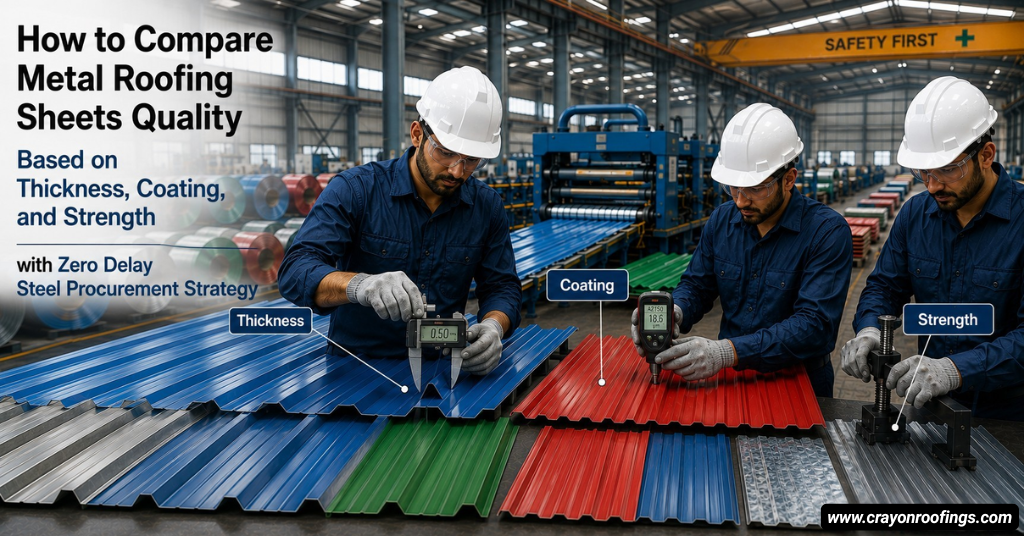
Choosing the proper metal roofing sheets for roofs may be considered one of the critical decisions made in industrial or commercial construction. While some individuals consider roofing sheets merely for their covering purposes, they also provide protection against rain, sunlight, winds, moisture, and environmental elements over the years.
Most buyers tend to focus only on the prices and aesthetic appearances of the roofing sheets available on the market today. However, the durability, reliability, and quality of metal roofing sheets rely significantly on three key factors: sheet thickness, coating quality, and material strength. Failure to understand these factors could cause leaks, corrosion, structural weaknesses, and high maintenance costs later.
In 2026, many industries invested time in more durable and sustainable roofing sheets that will operate effectively over the years without requiring much maintenance. For this reason, learning how to compare metal roofing sheets may prove vital when constructing a warehouse, factory, workshop, or commercial building.
Why Choosing Quality Metal Roofing Sheets Is Important
The quality of the roofing sheets will determine the effectiveness and lifespan of the structure that you construct. The more the quality of the roofing sheets, the better they will serve your building.
A good quality industrial roofing sheets have the following characteristics:
- Increased corrosion resistance
- Increased stability
- Increased roofing lifespan
- Increased weather protection
- Decreased maintenance costs
- Heat reflection
Industrial buildings are constantly exposed to heat, rain, moisture, dust, chemicals, and changing weather conditions, which is why low-quality roofing sheets often wear out much faster over time.
This is why experienced roofing professionals usually check factors like sheet thickness, coating protection, and material strength carefully before selecting roofing sheets for any industrial or commercial project
Understanding How Thickness Impacts Metal Roofing Sheets Quality
Apart from use in covering, metal roofing sheets serve other purposes such as protection against rain, hot and cold weather, winds, moisture, and other natural forces.
Quality roofing sheets improve the durability of industrial buildings and save costs that would otherwise be incurred during repairs. Durability increases the safety and efficiency of industrial roofing.
Why Roofing Sheet Thickness Matters
Metal roof sheets that are thinner may initially appear inexpensive; however, they may easily warp during installation or be influenced by strong winds and rain.
The advantages that come with thicker metal roof sheets are as follows:
- Structural stability
- Wind resistance
- Loading capacity
- Dent resistance
- Longer lifespan of the metal roof sheets
Industrial factory and warehouse roofing sheets require better roofing sheets to enhance their durability and reduce maintenance costs
Common Thickness Options in Metal Roofing Sheets
Metal roofing sheets are available in multiple thickness ranges depending on the building requirements.
| Thickness | Common Application |
| 0.30 mm | Temporary sheds and lightweight structures |
| 0.40 mm | Residential and small commercial roofing |
| 0.47 mm | Industrial roofing sheets and warehouse buildings |
| 0.50 mm | Heavy-duty commercial roofing applications |
| 0.60 mm | High-load industrial roofing projects |
In most industrial applications, roofing sheets with 0.47 mm thickness or higher are widely preferred because they provide better durability and structural reliability.
Understanding Actual Thickness and Total Coating thickness
The majority of purchasers will just consider the thickness, but not the total coated thickness .
The total coated thickness comprises of:
- Base steel thickness
- Zinc or aluminium coating
- Paint coating
Before purchasing metal roofing sheets, it is important to verify the product specifications carefully. Reliable suppliers usually provide quality test reports and technical data sheets to help buyers confirm the roofing sheet standards and performance
How Coating Improves Metal Roofing Sheets Lifespan
The coating applied to the metal sheets protects against corrosion and other forms of weather damage.
Metal roofing sheets without adequate coating will likely begin corroding sooner than expected, particularly in industrial or coastal regions.
Effective coatings enhance the following factors:
- Resistance to corrosion
- Resistance to moisture
- Durability
- Resistant to weather damage
- Service life
Different Types of Coatings Used in Metal Roofing Sheets
Galvanized Roofing Sheets
The galvanized roofing sheets have been zinc coated to prevent the formation of rust on the steel roof sheets.
Galvanized roofing sheets can be used for:
- Commercial roofs
- Building houses
- Industrial standard application
- Galvalume Roofing Sheets
Galvalume Roofing Sheets
Galvalume roof sheets feature a zinc-aluminium coating material that provides enhanced corrosion resistance compared to ordinary galvanized roof sheets.
The following applications typically favor galvalume roof sheets due to their superior corrosion resistance:
- Coastal areas
- Industrial plants
- Warehouses
- High humidity regions
Since galvalume roof sheets possess excellent corrosion resistance, they generally last longer than other roofing materials when installed in challenging environments.
Color Coated Roofing Sheets
Color coated roofing sheets are commonly used in industrial and commercial constructions due to their increased resistance against corrosion, as well as better appearance.
Advantages of color coated roof sheets are:
- UV resistant
- Reflective in nature
- Good finish
- Minimal chances of fading
- Increased weather protection
Industrial brands such as Crayon Roofings are often preferred for projects where roofing durability and consistent product quality are important.
Why Coating Thickness Is Important
Coating thickness is an important determinant, alongside coating types on the performance of the roofing sheet coating.
High-coated products normally have:
- Increased resistance against corrosion
- Increased lifespan of the roofing sheets
- Better weather resistance
- Higher resistance in coastal regions
Roofing sheets located in coastal areas and industrial areas need enhanced coatings due to factors such as moisture, chemicals, and air pollution.
According to the World Steel Association, steel remains an important material for building infrastructure owing to its toughness and durability.
How to Check Roofing Sheet Coating Quality
For any potential buyer of metal roofing sheets, checking for the quality of the coating is important.
These are the qualities to look out for:
- Consistent surface texture
- Good appearance of the coating
- No sign of peeling and cracking
- Manufacture markings
- Product warranty information
Why Strength Matters in Metal Roofing Sheets
Strength is one of the critical considerations when evaluating the efficiency of industrial roofing systems.
Strong roofing sheets offer:
- Better structural integrity
- Good load-bearing capabilities
- Wind Resilience
- Durability
Such characteristics become even more significant when dealing with massive industrial structures that require years of protection against environmental factors.
What Is Tensile Strength in Roofing Sheets?
Tensile strength is the highest level of stress a metal roofing sheet can endure before breaking down.
Roofing sheets with excellent tensile strength offer:
- Enhanced structural dependability
- Greater wind resistance
- Lower chance of bending
- Increased load-carrying ability
- Increased longevity
In the context of industrial sheds and warehouse roofing sheets, tensile strength is essential for improving the stability of roofs.
Difference Between Yield Strength and Tensile Strength
The confusion between these two concepts arises when comparing roofing materials.
- Yield strength refers to the stress level at which the roof sheet bends permanently.
- Tensile strength represents the maximum stress a material can sustain before breaking.
Both characteristics are crucial while choosing reliable steel sheets for industrial purposes.
Roofing Profile Design Also Affects Strength
The profile shape of roofing sheets also impacts their overall strength and load distribution.
Common roofing sheet profiles include:
- Corrugated roofing sheets
- Ribbed roofing sheets
- Trapezoidal roofing sheets
Among these, trapezoidal roofing sheets are widely used in industrial projects because they provide better structural support and load-handling performance. Crayon roofings is a supplier of JSW trapezoidal roofing sheets in Chennai
Important Factors to Compare Before Buying Metal Roofing Sheets
1. Check the Manufacturer Reputation
Purchase metal roofing sheets from reputable roofing sheet manufacturers and suppliers.
A reputable supplier will ensure that you get:
- Warranties for your products
- Technical assistance
- Quality certifications
- Consistent standards for materials
Dealing with reliable manufacturers will help you avoid purchasing low-quality roofing materials.
2. Compare Roofing Sheets Based on Climate Conditions
Environmental conditions vary and thus the type of roof varies.
For instance:
- Coastal areas require roofing sheets that resist corrosion
- High temperatures require heat reflective sheets
- High rainfall requires water resistant sheets
- Industrial sites require better-coated sheets
Selecting metal roofing sheets according to the environment will increase their longevity and cut down on maintenance.
3. Do Not Compare Roofing Sheets Only Based on Price
Most people fall into the trap of purchasing metal roofing sheets solely because of pricing.
Using low quality metal roofing sheets can result in:
- Roof leakage
- Early corrosion
- Structural damage
- Frequent maintenance
- Reduced roofing lifespan
Investing in better-quality metal roofing sheets usually provides better long-term value.
Common Mistakes to Avoid While Buying Metal Roofing Sheets
Many instances of roof failure occur due to the buyer’s disregard of technical specifications.
Here are some of the mistakes to avoid:
- Disregarding the true thickness of the roofing sheet
- Neglecting coating quality
- Purchasing low-strength metal roofing sheets
- Procuring products from unknown sellers
- Neglecting warranty terms
- Unsuitable choice of industrial roofing materials
Best Metal Roofing Sheets for Industrial Buildings
Industrial and warehouse structures need roofing materials that should function efficiently over a long period of time.
Generally, suitable industrial metal roofing sheets have the following qualities:
- High tensile strength
- Coating protection
- True thickness
- Resistance to corrosion
- Ability to withstand weather conditions
- Durable roofing sheet life
Currently, many industrial structures favor galvalume or color-coated roofing sheets of 0.47 mm or above thickness. Industrial construction projects have also favored PEB roofing sheets because they support faster installation and improve overall efficiency in modern structural steel and Pre-Engineered Building structures.
Conclusion
The choice of metal roofing sheets does not only revolve around aesthetics or prices. The thickness of metal roof sheets, coating, and the strength of the roofing materials will determine their durability and functionality.
Metal roofing sheets that are thicker in size ensure stability and better load-bearing ability of the roofing sheets. Better coating provides better corrosion resistance and longer-lasting roofing. Roofs with better roofing profiles and tensile strength ensure efficient functioning of industrial buildings.
It is important to take into consideration some factors before purchasing metal roof sheets. These factors include technical aspects such as coating and protection.
For high-quality roofing sheet requirements, contact Crayon Roofings. Quality investment in metal roofing sheets will minimize maintenance costs and ensure long-lasting performance for industrial roofing applications.
Frequently asked questions ( FAQ)
Q.What is the best thickness for metal roofing sheets?
A.For industrial and warehouse roofing applications, 0.47 mm and above is generally preferred because it offers better durability, strength, and load-bearing performance.
Q. Which coating is best for roofing sheets in coastal areas?
A. Galvalume roofing sheets are commonly preferred for coastal regions because they provide stronger corrosion resistance than regular galvanized roofing sheets.
Q. How do I choose good quality metal roofing sheets?
A. Check the roofing sheet thickness, coating quality, tensile strength, warranty, certifications, and manufacturer reputation before purchasing.
Q. Are thicker metal roofing sheets always better?
A. Thicker roofing sheets usually provide better strength and durability, but the ideal thickness depends on the application and structural requirements.
Q. What is the difference between galvanized and galvalume roofing sheets?
Galvanized roofing sheets use zinc coating, while galvalume roofing sheets use a zinc-aluminium coating that provides better corrosion resistance and longer lifespan.