
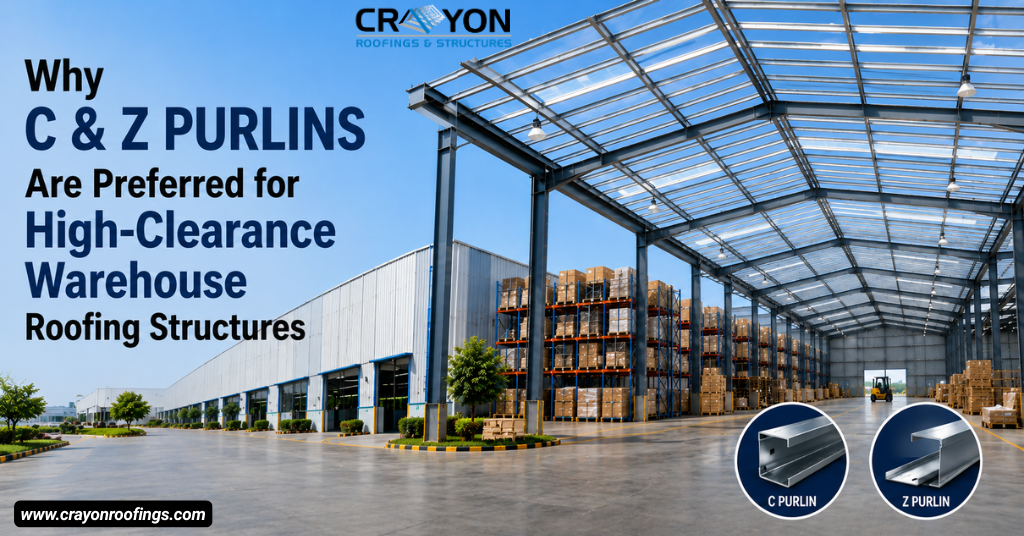
C & Z Purlins are among the most preferred roofing support systems used in modern high-clearance warehouse structures. Today’s industrial buildings are designed with larger floor areas, higher clearances, wider roof spans, and heavier operational requirements. Warehouses used for logistics, manufacturing, storage, and distribution now demand roofing systems that can handle long spans, varying loads, and long-term structural reliability without adding unnecessary weight to the building.
Because of this, C Purlins and Z Purlins are widely used in high-clearance warehouse roofing structures because they provide excellent structural support, improved load distribution, and cost-effective roofing performance.. Their ability to improve installation speed, support wide roofing spans, and optimize steel usage makes them widely preferred in modern warehouse construction.
In large industrial projects, the selection of purlins directly influences roof stability, construction efficiency, steel consumption, and long-term structural performance.
Why High-Clearance Warehouses Need Efficient Roofing Support
Modern warehouse buildings are designed with larger open spaces and higher vertical clearances to accommodate industrial operations, material handling systems, cranes, and storage equipment. These structures often involve:
- Wide column spacing
- Long roof spans
- Heavy suspended services
- HVAC installations
- Solar roofing systems
- Wind uplift exposure
- Dynamic operational loads
Traditional roofing support methods may increase structural weight and fabrication complexity in such projects. Cold-formed steel purlins help simplify the roofing system while maintaining strength, durability, and faster construction speed.
Why C & Z Purlins Are Widely Preferred in Warehouse Roofing Structures
The growing demand for larger industrial facilities has increased the adoption of C & Z Purlins in warehouse roofing applications.
1. Lightweight Yet Structurally Strong
One of the major reasons behind the popularity of C and Z Purlins is their excellent strength-to-weight performance. Even with lower self-weight, these sections are capable of supporting substantial roofing loads effectively.
Cold-forming technology improves the efficiency of the steel section, allowing better load handling without unnecessarily increasing the dead load on the primary structure.
This helps achieve:
- Reduced structural load
- Easier transportation
- Faster handling during erection
- Lower foundation stress
- Better structural efficiency
In high-clearance warehouse projects, maintaining a lighter roof structure helps improve overall building performance and construction economy.
2. Suitable for Long-Span Roofing Systems
The ability of C & Z Purlins to support long-span warehouse roofs makes them a preferred solution for modern industrial and logistics facilities.
Z Purlins are especially effective in these conditions because their overlapping design creates improved structural continuity. This allows the roofing system to distribute loads more efficiently across longer spans.
As a result, industrial buildings benefit from:
- Better bending resistance
- Improved load transfer
- Reduced deflection
- Increased span capability
- Optimized steel usage
This is one of the main reasons why Z Purlins are commonly used in modern PEB warehouse structures.
3. Faster Installation During Construction
Construction speed is extremely important in industrial projects where operational deadlines directly affect business timelines.
C and Z Purlins are manufactured with consistent dimensions and accurate hole placements, which minimizes the need for additional on-site fabrication work.
This supports:
- Faster erection work
- Reduced labor dependency
- Improved installation accuracy
- Better roofing alignment
- Lower welding requirements
For large warehouse projects, this helps accelerate overall project completion.
4. Better Cost Efficiency
Many project engineers prefer C & Z Purlins because they help optimize material usage without compromising structural stability. Cost optimization plays a major role in industrial construction planning. Unlike traditional hot-rolled steel members, cold-formed purlins use steel more efficiently, which helps lower overall construction weight and reduce project-related costs.
Some major cost-related advantages include:
- Reduced steel usage
- Lower transportation weight
- Faster installation savings
- Reduced fabrication work
- Lower long-term maintenance requirements
In long-span roofing systems, Z Purlins further improved material efficiency because of their overlapping continuity.
5. Improved Roof Load Distribution
Warehouse roofing systems are exposed to different types of loads throughout their service life, including:
- Dead loads
- Live loads
- Wind pressure
- Rainwater accumulation
- Solar panel loads
- HVAC equipment loads
Well-designed purlin systems help transfer these loads evenly across the structural frame. Proper load distribution improves roof durability, structural stability, and long-term roofing performance.
This becomes especially important in high-clearance industrial buildings exposed to strong wind conditions and varying operational loads.
6. Compatibility with Modern Roofing Systems
C & Z Purlins integrate efficiently with various roofing systems, helping warehouse buildings achieve both structural stability and installation efficiency.
C Purlins and Z Purlins work effectively with different roofing applications such as:
- Standing seam roofing
- Insulated panels
- Solar roofing systems
- Skylight installations
- Turbo ventilators
Their manufacturing accuracy also helps improve roof alignment and fastening precision during installation.
7. Highly Suitable for PEB Construction
Pre-Engineered Building Systems depend heavily on lightweight and optimized secondary structural members.
C and Z Purlins support the efficiency of PEB construction by enabling:
- Faster fabrication
- Standardized installation
- Lightweight structural design
- Reduced construction time
- Better material optimization
This is why they are extensively used in warehouse roofing systems designed under modern PEB engineering practices.
Understanding C & Z Purlins in Industrial Roofing
What Are C Purlins?
C Purlins are cold-formed steel sections manufactured in the shape of the letter “C.” These sections are mainly used as secondary structural members in roofing and cladding systems. Their primary role is to support roofing sheets and transfer loads to the main structural frame.
C Purlins are commonly used in:
- Industrial sheds
- Roofing support systems
- Wall cladding structures
- Mezzanine flooring systems
- Medium-span warehouse buildings
Their uniform profile allows convenient installation and makes them suitable for regular framing layouts used in industrial buildings.
What Are Z Purlins?
Z Purlins are steel sections formed in a Z-shaped profile. One of the biggest advantages of Z Purlins is their ability to overlap support points. This overlapping arrangement improves continuity between sections and allows better load transfer across longer roof spans.
Z Purlins are widely used in:
- Large warehouse structures
- Long-span industrial roofing systems
- High-clearance buildings
- PEB structures
- Logistics and storage facilities
Because of their structural continuity, Z Purlins are capable of handling larger spans more efficiently while also helping reduce unnecessary steel usage in roofing systems.
Importance of Proper Purlin Design
Even high-quality purlins require proper engineering design to ensure safe structural performance.
Factors considered during purlin design include:
- Roof span
- Wind load conditions
- Roof slope
- Dead load calculations
- Live load requirements
- Seismic considerations
- Roofing material selection
- Crane load conditions
Incorrect spacing or improper section selection can affect roof stability and long-term durability. This is why industrial projects should always source purlins from experienced structural steel suppliers.
Industrial Applications of C & Z Purlins
Across multiple industrial sectors, C & Z Purlins are recognized for their versatility, strength, and ease of installation.
C Purlins and Z Purlins are widely used across several industrial sectors, including:
- Warehouse buildings
- Factory roofing systems
- Distribution centers
- Cold storage facilities
- Industrial sheds
- Logistics parks
- Agricultural buildings
- Commercial steel structures
- Power plant buildings
- Aircraft hangars
Their versatility and structural efficiency make them an important component in modern industrial infrastructure.
Conclusion
For high-clearance industrial buildings, C & Z Purlins continue to offer a reliable combination of strength, lightweight performance, and long-term durability. As industrial warehouses continue evolving toward larger spans and higher operational clearances, roofing support systems must deliver greater structural efficiency, faster installation, and long-term durability. This is exactly why C Purlins and Z Purlins have become the preferred choice for modern warehouse roofing structures.
Their lightweight strength, excellent load-bearing performance, compatibility with advanced roofing systems, and cost-effective engineering advantages make them indispensable in today’s industrial construction industry.
Need assistance selecting the right C & Z Purlins and roofing systems for your project? Get in touch with Crayon Roofings & Structures for expert support, product recommendations, and customized solutions for industrial and warehouse buildings.
Frequently Asked Questions (FAQs):
Which is better for warehouse roofing: C Purlins or Z Purlins?
Z Purlins are generally preferred for long-span and high-clearance warehouse roofing because they provide better overlap continuity and load distribution. C Purlins are suitable for smaller or medium-span structures.
Why are Z Purlins widely used in PEB structures?
Z Purlins allow overlapping connections, which improve structural continuity and reduce steel consumption in long-span industrial roofing systems.
Are C and Z Purlins suitable for heavy industrial roofing?
Yes. Properly engineered C Purlins and Z Purlins can support heavy industrial roofing systems, including solar panels, HVAC equipment, and insulated roofing sheets.
What materials are used for C & Z Purlins?
Most industrial purlins are manufactured using high-tensile galvanized or cold-formed steel for improved strength and corrosion resistance.
Can purlins reduce warehouse construction cost?
Yes. Their lightweight nature, faster installation, and optimized steel usage help reduce overall structural and labor costs in industrial projects.